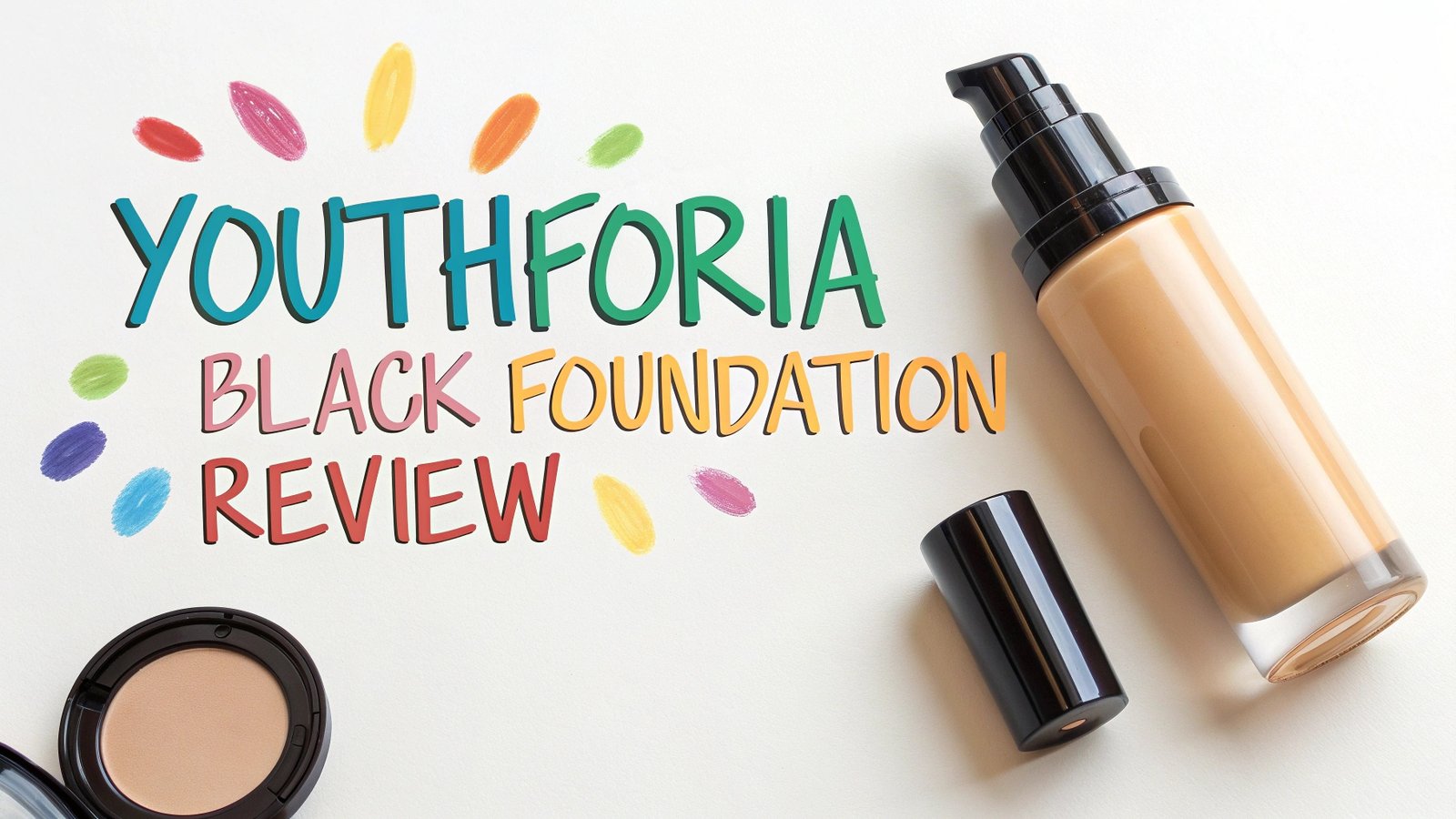
Youthforia Black Foundation Review: Controversial Shade
The beauty industry has been buzzing about Youthforia’s Date Night Skin Tint Serum Foundation, particularly the controversial shade 600.
This foundation promises lightweight coverage with skincare benefits, but recent events have placed the brand under intense scrutiny.
Our comprehensive review examines every aspect of this product to help you make an informed decision.
Key Takeaways
Here are the essential points about Youthforia’s black foundation:
- Controversial Formula: The shade 600 contains only black iron oxide pigment without proper undertones, creating an unnaturally gray appearance that fails to match real skin tones
- Skincare Benefits: The formula contains 68% skincare actives including vitamins and antioxidants, making it more than just makeup
- Limited Shade Range Issues: Despite claiming 24 shades, the brand struggled to create inclusive options for deeper skin tones
- Price Point: At $48 for 35ml, the foundation sits in the premium category but faced quality concerns in darker shades
- Brand Closure: Following the controversy, Youthforia announced closure in August 2026, making this product difficult to find
- Mixed Reviews: While lighter shades received praise for their natural finish, the darker shades faced widespread criticism from beauty experts and consumers

- FOUNDATION FOR FLAWLESS SKIN: Youthforia's Date Night is a light-to-medium coverage serum liquid foundation, formulated with 68% skincare active ingredients, that melt into skin for a glass skin finish, while controlling sebum for long-lasting wear.
- SUPPORTS HEALTHY SKIN: Our weightless formula blends effortlessly and can build to your desired coverage. Luxurious texturizing ingredients prevent a “cakey” look, help support a healthy skincare barrier and allow your skin to breathe.
Last update on 2026-10-27 / Affiliate links / Images from Amazon Product Advertising API Some of the links on this website are affiliate links, which means that at no additional cost to you, I earn a commission if you click through and make a purchase. I only recommend products and services that I believe will add value to my readers. Thank you for your support!
Understanding Youthforia Date Night Skin Tint Serum Foundation
The Date Night Skin Tint Serum Foundation was Youthforia’s flagship product. The brand marketed it as revolutionary skincare makeup. Users could sleep in this foundation without skin damage. The formula combined traditional makeup with active skincare ingredients.
This product gained attention for its unique positioning. Most foundations require removal before sleep. Youthforia challenged this norm with their formulation. The company claimed their foundation actually benefited skin overnight. This concept attracted consumers seeking multifunctional products.
The foundation promised medium buildable coverage with a glass skin finish. The texture felt lightweight on application. Users reported a natural, dewy appearance in lighter shades. The product aimed to blur the line between skincare and makeup.
Key features included silicone-free formulation and cruelty-free testing. The brand emphasized clean beauty standards. Ingredients focused on skin health rather than just coverage. This approach appealed to conscious consumers prioritizing ingredient quality.
The packaging reflected the brand’s aesthetic values. Clean, minimalist design communicated premium positioning. The bottle contained 35ml of product. This size aligned with luxury foundation standards. The pump dispenser allowed controlled product application.
The Controversial Shade 600 Explained
The shade 600 controversy became a defining moment for Youthforia. The brand released this darkest shade in response to criticism about limited inclusivity. However, the execution sparked widespread backlash from beauty experts and consumers alike.
Cosmetic chemist Javon Ford analyzed the formula publicly. His findings revealed fundamental formulation flaws. The foundation contained only black iron oxide pigment. This created an unnatural gray undertone when applied. Real skin tones require complex undertone combinations.
The controversy highlighted broader industry issues around inclusive beauty. Many brands struggle with deeper shade formulations. Creating authentic darker shades requires expertise and proper testing. Youthforia’s attempt appeared rushed and poorly researched.
Social media reactions amplified the criticism. Beauty influencers demonstrated the foundation’s poor performance. The product appeared pitch black in the bottle. When applied, it created an ashy, unnatural appearance. This sparked conversations about colorism in beauty.
The brand faced accusations of performative inclusivity. Critics argued Youthforia prioritized quick responses over quality formulations. The foundation seemed designed to address criticism rather than serve actual customers. This approach backfired spectacularly.
Professional makeup artists joined the criticism. They explained proper foundation formulation principles. Darker shades require careful pigment balancing. The absence of warm or cool undertones made the product unwearable for most people.
Top 3 Alternatives for Youthforia Foundation

- SERVING FACE: Black Radiance Color Perfect Foundation Sticks have a pigment-rich foundation stick on one side & a soft brush applicator on the other side so your face makeup is always on point.
- SCULPT & CONTOUR: Inspired by the contouring, shaping & shading trend, the Color Perfect Foundation Stick is the quintessential tool to help sculpt & add dimension to your face.
Last update on 2026-10-27 / Affiliate links / Images from Amazon Product Advertising API Some of the links on this website are affiliate links, which means that at no additional cost to you, I earn a commission if you click through and make a purchase. I only recommend products and services that I believe will add value to my readers. Thank you for your support!

- Pigmented liquid formula infused with caffeine, sodium hyaluronate, and Vitamin C
- Helps to reduce the appearance of hyperpigmentation, blemishes, and facial imperfections

Last update on 2026-10-27 / Affiliate links / Images from Amazon Product Advertising API Some of the links on this website are affiliate links, which means that at no additional cost to you, I earn a commission if you click through and make a purchase. I only recommend products and services that I believe will add value to my readers. Thank you for your support!

- RESTORE & ILLUMINATE: e.l.f. Flawless Finish Foundation is a lightweight liquid foundation that naturally blends into skin (and hydrates while you’re at it) to help improve uneven skin tone and texture. The shade Nutmeg is deep with peachy undertones.
- ALL-DAY WEAR: This highly blendable and buildable formula goes on smooth as silk, providing medium-to-full coverage and weightless all-day wear. Added perk: it’s supercharged with glycerin to hydrate and soften your skin.
Last update on 2026-10-27 / Affiliate links / Images from Amazon Product Advertising API Some of the links on this website are affiliate links, which means that at no additional cost to you, I earn a commission if you click through and make a purchase. I only recommend products and services that I believe will add value to my readers. Thank you for your support!
Formula and Ingredients Analysis
The Date Night Foundation contained impressive skincare actives. Youthforia emphasized the 68% active ingredient concentration. This percentage exceeded most traditional foundations. The formula included vitamins, antioxidants, and hydrating compounds.
Key active ingredients supported skin health during wear. Vitamin C provided antioxidant protection. Hyaluronic acid maintained moisture levels. These ingredients justified the sleep-friendly claims. Traditional foundations lack such beneficial components.
The silicone-free formulation distinguished this product from competitors. Most foundations rely heavily on silicones for texture. Youthforia chose alternative ingredients for similar effects. This approach appealed to consumers avoiding silicone-based products.
Problematic pigmentation emerged in darker shades. The brand used iron oxide 77499 as the primary dark pigment. This single pigment created the controversial gray undertones. Professional formulations require multiple pigments for natural skin matching.
The base formula worked well in lighter shades. Users reported smooth application and natural finish. The texture blended easily with proper techniques. Coverage remained buildable without heaviness. These positive aspects applied mainly to fair-to-medium shades.
Preservative systems maintained product stability. The brand chose gentle preservation methods. This supported their clean beauty positioning. However, gentler preservatives sometimes reduce shelf life. Users needed to monitor product freshness carefully.
Coverage and Performance Review
Light-to-medium coverage characterized the foundation’s performance in suitable shades. The formula provided natural-looking results without heavy feeling. Users could build coverage gradually for desired intensity. This flexibility appealed to various makeup preferences.
The glass skin finish delivered on promises for compatible skin tones. The foundation created a natural, healthy glow. Skin appeared smooth and refined after application. This effect worked particularly well on well-moisturized skin. Proper skincare preparation enhanced results.
Blending capabilities varied significantly by shade. Lighter tones blended seamlessly into skin. Users reported easy application with various tools. Fingers, brushes, and sponges all worked effectively. The formula remained workable during application.
Longevity testing showed mixed results. Some users experienced all-day wear without touch-ups. Others reported fading or separating after several hours. Skin type and climate affected performance significantly. Oily skin types faced more challenges with wear time.
The buildable nature allowed customization. Light application created skin-tint effects. Additional layers increased coverage without looking cakey. This versatility suited different occasions and preferences. Users appreciated the adaptable formula.
Setting requirements varied among users. Some found setting powder unnecessary. Others needed powder for extended wear. The foundation’s finish remained slightly tacky until fully set. This characteristic affected subsequent makeup application.
Skin Compatibility and Sensitivity
Sensitive skin users generally tolerated the foundation well in appropriate shades. The clean formulation avoided common irritants. Most users experienced no adverse reactions. The skincare actives actually benefited some skin types during wear.
Acne-prone skin responses varied considerably. Some users reported improved skin condition over time. The active ingredients potentially provided skin benefits. However, others experienced breakouts from the formula. Individual skin chemistry affected compatibility significantly.
The sleep-friendly claims showed mixed validation. Some users successfully slept in the foundation without issues. Skin appeared healthy the following morning. However, dermatologists generally recommend removing makeup before sleep regardless of formulation claims.
Hydrating properties benefited dry skin types particularly. The foundation provided moisture throughout wear. Users noticed improved skin texture over time. This distinguished the product from typical drying foundations. The skincare benefits appeared genuine for compatible users.
Allergic reactions remained rare but possible. The clean ingredient list reduced risk factors. However, individual sensitivities could still cause problems. Users with known cosmetic allergies should patch test carefully before full application.
Professional recommendations suggested cautious use. While the formula offered benefits, sleeping in makeup remained controversial. Dermatologists emphasized proper skincare routines regardless of foundation claims. The product worked best as part of comprehensive skin care.
Application Tips and Techniques
Proper skin preparation proved essential for optimal results. Clean, well-moisturized skin provided the best canvas. Users should wait for skincare to fully absorb before application. This prevented pilling or uneven texture during blending.
Application tools offered different benefits. Fingers provided warmth that helped blend the formula. Damp beauty sponges created the most natural finish. Dense brushes built coverage effectively. Users could experiment to find their preferred method.
Layering techniques maximized the buildable coverage. Start with thin applications and build gradually. Allow each layer to set before adding more. This prevented a heavy or unnatural appearance. Patience during application improved final results significantly.
Problem areas required special attention. The foundation could emphasize dry patches if skin preparation was inadequate. Extra moisturizer on these areas helped smooth application. Textured skin benefited from primer use despite silicone-free claims.
Setting strategies varied by skin type and desired longevity. Light powder dusting extended wear time. Setting spray locked in the finish effectively. Some users preferred no setting products for maximum dewiness. Personal preference guided these choices.
Removal techniques remained important despite sleep-friendly marketing. Gentle cleansing preserved skin health long-term. Double cleansing effectively removed all traces. This maintained skin condition and prevented product buildup over time.
Shade Range and Color Matching
The shade range controversy highlighted Youthforia’s biggest challenge. Initially launching with limited options, the brand faced criticism for poor inclusivity. Their response with shade 600 created even more problems than the original limited range.
Undertone analysis revealed significant formulation flaws in deeper shades. While lighter shades offered neutral, warm, and cool options, darker shades lacked this sophistication. The problematic shade 600 contained no undertones at all, creating the infamous gray cast.
Professional color matching became nearly impossible with the darkest shade. Makeup artists publicly demonstrated the product’s failures. The foundation appeared black in the bottle but turned gray on skin. No human skin tone matched this unnatural color.
Medium shades performed significantly better. Shades in the 200-400 range provided workable options. Users found suitable matches within this range. These shades maintained the formula’s positive qualities without the pigmentation problems affecting darker options.
The absence of olive undertones limited options further. Many consumers with olive-leaning skin struggled to find matches. This common undertone category remained underrepresented. The brand’s focus on basic undertone categories excluded many potential users.
Shade naming conventions used numerical systems. Higher numbers indicated deeper tones. However, the jump to shade 600 created an enormous gap. No intermediate shades bridged medium-deep to very deep tones. This left a significant portion of consumers without options.
Comparison with Competitor Products
Fenty Beauty set industry standards for inclusive shade ranges. Their Pro Filt’r Foundation offered 50 shades with proper undertone variations. Each deep shade contained carefully balanced pigments. This contrast highlighted Youthforia’s formulation shortcomings dramatically.
The Ordinary provided affordable coverage foundations with clean formulations. Their Serum Foundation shared similar skincare-meets-makeup positioning. However, their shade range, while limited, maintained color accuracy across all options. Quality remained consistent throughout the range.
Glossier targeted similar demographics with their Perfecting Skin Tint. The buildable coverage and natural finish aligned closely with Youthforia’s goals. However, Glossier maintained consistent quality across their more limited but well-executed shade range.
High-end alternatives like Giorgio Armani Luminous Silk offered superior performance. Professional formulation showed in every shade. Deep tones contained proper undertone balance. The price point reflected this quality difference significantly.
Drugstore options like L’Oreal True Match provided better shade matching. Even budget formulations maintained color accuracy. This made Youthforia’s premium-priced failures more glaring. Price alone couldn’t justify poor shade performance.
Clean beauty competitors like ILIA successfully balanced performance with clean ingredients. Their shade ranges remained limited but accurately formulated. Users could trust color matching across the entire range. This consistency eluded Youthforia’s development team.
Price Value Assessment
At $48 for 35ml, the foundation positioned itself in the premium segment. This price point competed with high-end brands like NARS and MAC. However, the quality inconsistencies across shades undermined the value proposition significantly.
Cost per application remained reasonable for users who found suitable shades. The buildable coverage meant less product per use. Users could stretch the bottle across multiple months with proper application. This supported the premium pricing for compatible shades.
The skincare benefits partially justified the higher cost. Traditional foundations rarely contain 68% active ingredients. Users essentially purchased skincare and makeup combined. This dual functionality added value for consumers prioritizing ingredient quality.
Comparable products offered better value in many cases. The Ordinary Serum Foundation provided similar benefits at $7.90. While the texture differed, the skincare-makeup combination remained present. This price difference challenged Youthforia’s premium positioning.
Professional alternatives at similar price points delivered consistent quality. NARS Natural Radiant Longwear offered reliable performance across all shades. The additional cost seemed justified by consistent formulation quality. Youthforia couldn’t match this reliability.
Brand closure eliminated future value entirely. Remaining inventory became clearance items. Users couldn’t repurchase their matches long-term. This uncertainty reduced the effective value proposition to zero for planning purposes.
The Brand’s Response to Criticism
Initial silence characterized Youthforia’s early response to shade 600 criticism. The brand avoided direct acknowledgment of the formulation problems. This approach amplified negative sentiment among beauty communities. Consumers expected transparent communication about obvious issues.
Later statements attempted damage control without admitting fundamental flaws. The brand emphasized their commitment to inclusivity without addressing specific pigmentation problems. These generic responses failed to satisfy critics seeking concrete solutions and accountability.
Social media management became increasingly defensive. The brand deleted negative comments and limited discussion. This censorship approach backfired by generating additional criticism. Transparency could have provided better outcomes than attempted suppression.
Product reformulation never materialized despite promises. The brand continued selling the problematic shade without improvements. This decision prioritized short-term revenue over customer satisfaction. Professional intervention could have salvaged the situation.
Community feedback received minimal consideration. Beauty influencers and cosmetic chemists offered constructive criticism. Their expertise could have guided proper reformulation. The brand’s dismissal of professional advice proved costly ultimately.
Brand closure announcement came suddenly without advance warning. Customers lost support and repurchase opportunities immediately. This abrupt ending left many questions unanswered. Better communication could have preserved some brand equity through transition.
Professional Beauty Expert Opinions
Cosmetic chemists universally criticized the shade 600 formulation. Javon Ford’s analysis became viral for its technical accuracy. His explanation of pigment requirements educated consumers about proper foundation development. Professional expertise validated consumer complaints effectively.
Makeup artists refused to work with the problematic shades. Professional portfolios couldn’t risk association with poor-performing products. This rejection by industry professionals highlighted the product’s fundamental flaws. Artistry required reliable tools.
Beauty editors from major publications covered the controversy extensively. Allure, Marie Claire, and The Cut published detailed analyses. These mainstream media outlets legitimized consumer concerns. Editorial coverage amplified the brand’s reputation damage significantly.
Dermatologists questioned the sleep-friendly claims despite clean ingredients. While the formula contained beneficial actives, sleeping in makeup remained problematic. Professional medical opinion emphasized proper cleansing routines regardless of product marketing claims.
Color theorists explained why the foundation failed optically. Undertone science required multiple pigments for natural appearance. Single pigment formulations couldn’t replicate human skin complexity. This educational aspect helped consumers understand the technical problems.
Industry veterans used the controversy as teaching moments. Inclusive beauty development required expertise and testing. Rushed responses to criticism often created worse problems. This case study would influence future brand development strategies.
Long-term Skin Effects and Safety
Extended wear testing by users revealed mixed safety results. Some consumers successfully used the foundation for months without adverse effects. However, others developed skin problems from regular use. Individual skin chemistry affected long-term compatibility significantly.
Sleeping in makeup remained controversial among dermatologists. While Youthforia’s formula contained beneficial ingredients, proper cleansing remained important for skin health. The convenience marketing couldn’t override fundamental skincare principles completely.
Active ingredient benefits showed in some long-term users. Vitamin C and hyaluronic acid provided genuine skin improvements. Users reported better skin texture over time. These benefits applied mainly to compatible shades and skin types.
Potential sensitization from extended use concerned some professionals. Even clean formulations could cause reactions with prolonged contact. Patch testing and gradual introduction remained important safety measures for any new product.
Pore clogging reports varied among users. Some experienced clearer skin while using the foundation. Others developed congestion or breakouts. Non-comedogenic testing hadn’t been extensively verified across all shades and skin types.
Professional monitoring became important for regular users. Dermatologist consultation could identify early problems before they worsened. This precaution applied especially to users sleeping in the foundation regularly despite expert recommendations.
Final Verdict and Recommendations
The Youthforia Date Night Foundation presented a mixed legacy. Lighter shades delivered on promises with natural coverage and skincare benefits. However, the shade 600 controversy exposed fundamental problems in inclusive beauty development. The brand’s approach prioritized quick responses over quality formulation.
For suitable skin tones, the foundation offered genuine value. The skincare-makeup combination provided unique benefits. Users appreciated the natural finish and buildable coverage. Clean ingredient enthusiasts found appeal in the formulation philosophy.
Avoid problematic shades entirely. The darker options failed basic quality standards. Professional and consumer consensus agreed on their unwearability. No amount of application skill could overcome fundamental formulation flaws.
Consider alternatives for reliability and inclusivity. Established brands offer better shade accuracy and consistency. The beauty industry provides numerous options combining clean ingredients with proper formulation. Research thoroughly before committing to any premium foundation purchase.
Learn from this case about inclusive beauty development. Proper testing and professional consultation prevent such failures. Brands must prioritize quality over quick responses to criticism. Consumer education helps identify quality issues before purchase.
Moving forward, the beauty industry benefits from this cautionary tale. Inclusive development requires expertise, time, and genuine commitment. Performative responses often create worse problems than original criticisms. This lesson influences future brand strategies significantly.
Frequently Asked Questions
Is Youthforia foundation really safe to sleep in?
While the foundation contains beneficial skincare ingredients, dermatologists generally recommend removing all makeup before sleep. The clean formulation reduces risks compared to traditional foundations, but proper cleansing remains important for optimal skin health. Some users successfully slept in the foundation without problems, but individual results vary significantly.
Why did shade 600 look so unnatural?
Cosmetic chemist analysis revealed the foundation contained only black iron oxide pigment without proper undertones. Real human skin requires complex pigment combinations to appear natural. The single pigment created gray undertones that don’t exist in actual skin tones, making the shade unwearable for most people.
Can I still buy Youthforia foundation after the brand closure?
Youthforia announced closure in August 2026, making future purchases impossible through official channels. Some retailers may carry remaining inventory temporarily, but long-term availability is uncertain. Users should seek alternative products for consistent access to their preferred foundation shades.
What made this foundation different from regular makeup?
The Date Night Foundation contained 68% skincare actives including vitamins and antioxidants, distinguishing it from traditional foundations. This high concentration of beneficial ingredients provided genuine skincare benefits during wear. The silicone-free formulation also differed from most conventional foundations in the market.
Are there better alternatives for deep skin tones?
Yes, several brands offer superior options for deeper skin tones. Fenty Beauty, Black Radiance, and BLK/OPL provide properly formulated darker shades with accurate undertones. These alternatives offer better color matching and consistent quality across their entire shade ranges.
Did Youthforia ever fix the problematic shades?
No, the brand never reformulated the controversial shade 600 despite widespread criticism and expert recommendations. The product remained unchanged until the company’s closure announcement. This lack of response to legitimate quality concerns contributed to the brand’s ultimate failure in the market.