Suri Toothbrush Review 2026: Worth It?
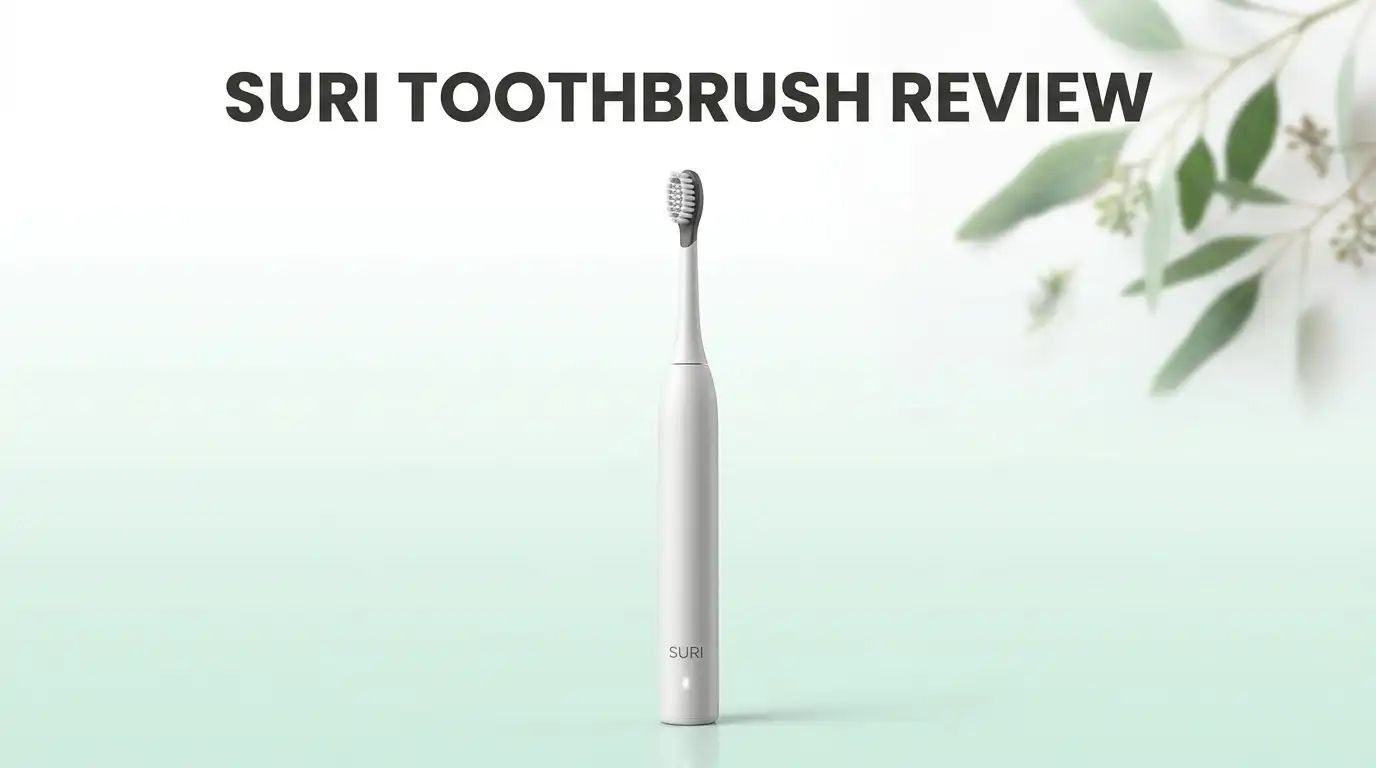
The Suri toothbrush looks nothing like the bulky plastic brush sitting in your bathroom right now. It is slim, made from aluminium, and it ships with plant based heads that the company takes back and recycles for free.
That pitch sounds great on a website. The real question is simpler: does it actually clean your teeth, and does it last?
I have spent time with this brush, read through dentist assessments, dug into owner complaints, and compared it against the two giants of the category.
In A Nutshell:
- The clean is genuinely good, not class leading. The Suri Pro 2.0 runs at 30,000 brush strokes per minute. Independent plaque tests show it removes plaque as well as leading Sonicare models. But rival brushes reach 50,000 or even 66,000 strokes per minute, and heavy coffee drinkers may notice the difference.
- Battery life is the standout feature. Hands on testing clocked 38 days of real world use on a single charge. That is roughly double what most Oral B models deliver. A full recharge takes about seven hours.
- The travel case is the best in its price bracket. It charges the brush wirelessly, holds one head, and runs a one minute UV C sanitising cycle from its own internal battery.
- The pressure sensor works but needs extra force. Testers estimate it takes 10 to 20 percent more pressure to trigger than Sonicare or Oral B sensors. It can also be switched off by accident.
- Reliability is the real weak spot. A visible group of owners report brushes that stop charging or stop turning on within the first year. Suri offers cheap out of warranty repairs, which helps, but the failure reports are not rare.
- You pay a premium for the sustainability story. Three year ownership cost sits above the equivalent Oral B or Sonicare. You are buying values as much as performance.
SURI Pro Sonic Electric Toothbrush

- USA'S #1 RATED TOOTHBRUSH - The highest rated toothbrush on Trustpilot in the USA, based on over 17,000 verified reviews. Award-winning and loved by over 800,000 happy brushers.
- UV-CLEANING TRAVEL CASE 2.0 - SURI includes a redesigned travel case with a battery-powered UV-C light that cleans the brush head in just 1 minute. It also charges your brush when plugged in. At last—a travel electric toothbrush you'll love.
Last update on 2026-09-16 / Affiliate links / Images from Amazon Product Advertising API Some of the links on this website are affiliate links, which means that at no additional cost to you, I earn a commission if you click through and make a purchase. I only recommend products and services that I believe will add value to my readers. Thank you for your support!
The Suri Pro 2.0 is the brand’s flagship brush and the version most people mean when they say “Suri.” It replaced the original 2022 model and fixed almost every complaint reviewers raised about generation one.
The handle is anodised aluminium, 22cm tall with a head fitted, and weighs 78 grams. It is 2cm wide and 1.6cm thick, which makes it noticeably slimmer than any Sonicare or Oral B handle. There are five colour options.
Inside sits a sonic motor delivering 30,000 vibrations per minute. Suri says the motor is 25 percent more powerful than the original. Hands on testers put the felt improvement closer to 15 or 20 percent, which is still a real gain.
You get two cleaning modes and nothing more. Gentle Clean shows a white light on the handle. Deep Clean shows blue. A single press of the power button switches between them, and the brush remembers your last choice.
The restraint here is deliberate. There is no app, no Bluetooth, no ten mode menu you will never use. Suri argues those features are gimmicks, and after using the brush I largely agree.
The brush charges by wireless induction, either on the magnetic stand or inside the case. Water resistance handles shower use without trouble. A travel lock stops the brush buzzing to life inside your bag, which you activate by holding the power button for five seconds until the light turns orange.
Unboxing Experience: What Arrives In The Box
The packaging tells you what kind of company made this. There is no plastic clamshell, no twist ties, no foam. Everything arrives in moulded paper pulp, the kind used for egg cartons but pressed to a much finer finish. The total package weighs 530 grams.
Lift the lid and the handle sits in a shaped recess, wrapped in thin paper. It feels closer to opening a watch box than a drugstore toothbrush. The aluminium is cool to the touch and the weight distribution is immediately obvious.
Underneath the handle you find the charging stand with a hardwired USB C cable roughly 110cm long, one plant based brush head, a plant based head cover for travel, and the magnetic mirror mount.
That mirror mount is the sleeper hit of the box. It is a small metal disc with pre applied adhesive. Peel the tab, press it onto your mirror or tile, and the brush hangs there off the countertop. No screws. No drilling. It keeps the sink clear and stops the brush getting knocked into the basin.
If you bought the bundle with the travel case, that comes in its own paper compartment with a separate voltage controlled USB C cable.
One honest note on setup. There is no power brick included, only cables. If you do not already own a USB C wall plug, you need to supply one. The instruction card is minimal to the point of being unhelpful, and it does not explain the pressure sensor toggle at all. That omission caused one reviewer to think his unit was broken.
Design And Build Quality In Daily Use
The aluminium body is the first thing people comment on and the thing that holds up best over time. Plastic handles develop a cheap creak after a year. This one does not. The finish resists toothpaste staining and wipes clean with a thumb.
The slim profile cuts both ways. It looks superb on a countertop and slides into a wash bag easily. But there is very little to grip. No rubber panels, no textured zones, no finger grooves.
If you have arthritis or reduced hand strength, try before you buy. A chunkier Oral B handle gives you more to hold onto, especially with wet hands. The Suri is not slippery, it is just narrow.
Grime does collect in one spot: the tiny gap where the head meets the metal shaft. Toothpaste and water seep in there. The fix takes three seconds with a cloth, and this happens on every electric brush ever made. Suri is easier to clean here than Oral B, which has more seams and a textured grip that traps residue.
Swapping heads takes a firm pull. The fit is snug by design, so the head does not wobble during brushing. It loosens slightly as a head ages. The power button needs normal pressure, nothing stiff.
Noise measured 58 decibels in independent testing. That figure places it among the quietest electric brushes on sale. Oral B models are considerably louder. If you share a bathroom wall with a sleeping baby, this matters more than you would expect.
Top 3 Alternative for Suri Toothbrush

- The C2 Optimal Plaque brush head with soft, flexible, stain-removal bristles helps whiten and polish your teeth; it also removes up to 700% better plaque than a manual toothbrush
- Electric toothbrush for adults providing gentle yet effective cleaning: the Advanced Sonic Technology pulses fluid between teeth and along the gumline for even more effective oral care

Last update on 2026-09-16 / Affiliate links / Images from Amazon Product Advertising API Some of the links on this website are affiliate links, which means that at no additional cost to you, I earn a commission if you click through and make a purchase. I only recommend products and services that I believe will add value to my readers. Thank you for your support!
Philips Sonicare 4100 Rechargeable Electric Toothbrush

- #1 Dentist recommended oral b io: This Oral-B Braun electric toothbrush delivers smooth spinning brush motion with gentle micro-vibrations; clinically proven to remove up to 400 %* more plaque along the gumline; supports teeth whitening and oral hygiene
- Intelligent gum protection: Achieve healthier gums in just 1 week; the smart iO sensor alerts you if you press too hard, ensuring optimal pressure to protect sensitive gums; compatible with oral b io replacement heads; no more harsh scrubbing
Last update on 2026-09-16 / Affiliate links / Images from Amazon Product Advertising API Some of the links on this website are affiliate links, which means that at no additional cost to you, I earn a commission if you click through and make a purchase. I only recommend products and services that I believe will add value to my readers. Thank you for your support!
Oral B iO Series 3 Rechargeable Electric Toothbrush

- Guided Brushing Technique: Oral health is a big deal - and the right technique makes all the difference. The quip Toothbrush has a 2-minute built-in timer for a complete routine + 30-second pulses for an even clean. Extra brush head included
- Timed Sonic Vibrations: Soft bristles help clean tight spaces and sensitive teeth and gums with gentle sonic vibrations for a safe, effective electric toothbrush for adults. Keep your smile healthy & plaque-free
Last update on 2026-09-16 / Affiliate links / Images from Amazon Product Advertising API Some of the links on this website are affiliate links, which means that at no additional cost to you, I earn a commission if you click through and make a purchase. I only recommend products and services that I believe will add value to my readers. Thank you for your support!
Quip Metal Sonic Electric Toothbrush
Cleaning Power And Brushing Feel
This is where opinions split, so let me give you both sides.
Plaque disclosing tests, where a dye stains remaining plaque after brushing, show the Suri Pro 2.0 performing as well as top end Sonicare models. One clinical study commissioned by Suri compared it against an ADA accepted manual brush and found it removed 100 percent more plaque after the first use, with measurably healthier gums after two weeks. Treat brand funded studies with normal caution, but the plaque disclosing results from independent testers are harder to argue with.
Day to day, teeth feel smooth after brushing. Gums respond well over several weeks. The Deep Clean mode is genuinely invigorating in a way the first generation Suri was not.
Now the caveat. At 30,000 strokes per minute, the Suri sits at the lower end of sonic power. One reviewer noted that on a competing brush, 30,000 is labelled the gentle setting, with higher modes reaching 50,000. Another rival hits 66,000 while also oscillating.
The practical difference shows up after a heavy night out or several cups of coffee. That furry film on your teeth clears faster with a more powerful brush. For ordinary daily plaque removal, you will not notice a gap.
There is also only one head style. No sensitive option, no whitening option, no small head for tight mouths. If you have receding gums or sensitivity, that lack of choice is a real limitation.
Battery Life And Charging Test Results
Battery life is the single strongest argument for buying this brush.
Independent testing measured 38 days of real use from one charge, based on two minutes of brushing twice a day. That is over a month of brushing without touching a cable. The original Suri managed around 40 days, so the more powerful motor costs you roughly two days. You will never notice.
Compare that to an Oral B iO Series 3, which tested at 17 days. The Suri lasts more than twice as long as one of the most popular brushes on the market.
Charging happens by induction. Generation one used two gold spring pins on the base of the handle, and those pins were a genuine failure point. They corroded when the brush was stored damp, and one reviewer went through three units because of it. Switching to wireless charging removes that whole category of problem.
A full charge takes about seven hours. That is slow compared to fast charging brushes, but with 38 days of runtime you only do it eleven or twelve times a year.
The stand stays magnetic, so the handle will not topple from a nudge. Charging feedback comes from the handle LED: pulsing white means charging, solid white means full.
You can charge inside the travel case too, using its USB C port. Suri supplies a specific voltage controlled cable and recommends you use it. Other USB C cables generally work, but not every one will.
The UV C Travel Case: Useful Or Gimmick?
The case is the most divisive part of the package, and I will be straight with you: it is excellent hardware built around a questionable feature.
Start with the good. The case measures 23.9cm long, 3.7cm wide and 3.1cm deep, and weighs 150 grams empty. It holds the handle and one head. The shell is hard, the corners are rounded on the 2.0 version rather than sharp like generation one, and it survives being crushed under luggage.
The case charges the brush wirelessly. Plug a USB C cable into the case, drop the brush in, and it charges. No pins, no alignment fiddling. For anyone who travels monthly, this is a proper convenience upgrade.
Now the UV C light. A small battery inside the case powers an ultraviolet lamp positioned above the bristles. Press the button and it runs a one minute sanitising cycle. Suri claims this kills bacteria on the head.
Here is my honest take: the evidence that you need this is thin. Reviewers who test toothbrushes for a living have repeatedly said the same thing. A rinsed head left to air dry is fine for almost everyone. The light looks impressive through the case window and it makes a nice party trick, but it solves a problem most people do not have.
There is an irony worth naming. A brand built on cutting waste added a second lithium battery and a UV lamp to a travel case. Those are extra components with their own end of life cost. Suri now sells the brush without the case, which is the more sensible option for most buyers.
Pressure Sensor, Timer And Pacer
The pressure sensor was the headline missing feature on the original Suri, and its arrival on the Pro 2.0 is what makes this brush competitive with the big brands.
When you brush too hard, the handle vibrates strongly, the sound changes, and the bristles stop moving entirely. It feels almost like the brush switched off. Ease off and the bristles start again, with the timer picking up where it left off.
As feedback goes, it is one of the clearest implementations I have used. There is no ambiguity about whether you triggered it.
The problem is the threshold. Testers estimate the Suri needs 10 to 20 percent more force to activate than Sonicare or Oral B sensors. If you are a hard brusher, you might sail past the point where those brands would have warned you.
You can also turn the sensor off entirely by holding the power button for five seconds while the brush runs. Useful if you want to scrub a stubborn piece of food. Dangerous if you trigger it by accident and then assume the sensor broke. The manual does not explain this clearly.
The timer runs two minutes with a pacer buzz every 30 seconds. Both work, but the pacer pulses are brief and easy to miss compared to the obvious jolt Sonicare gives you.
One genuine annoyance: switching the brush off mid session resets the timer. Some rivals treat a quick off and on as a pause. Suri treats it as a new session, so you lose your place.
SURI Recyclable Electric Toothbrush Heads

- COMPATIBLE WITH SURI PRO & CORE BRUSHES – Every SURI toothbrush head fits both SURI Pro and Core models
- SURI TOOTHBRUSH REPLACEMENT HEADS - The perfect replacement toothbrush heads for SURI sonic toothbrushes. Plant based medium-soft bristles to help maintain oral hygiene
Last update on 2026-09-16 / Affiliate links / Images from Amazon Product Advertising API Some of the links on this website are affiliate links, which means that at no additional cost to you, I earn a commission if you click through and make a purchase. I only recommend products and services that I believe will add value to my readers. Thank you for your support!
The heads are the heart of Suri’s environmental case, and they are the part you will keep buying.
Each head is made from cornstarch with castor oil bristles. No petroleum plastic. Because the material differs from conventional nylon, the bristles feel slightly softer out of the packet and they do not develop the mould that collects inside cheap plastic heads.
Heads fit both the Pro 2.0 and the original Suri. They also fit the newer Core 1.0. That interchangeability is unusual and welcome, since it means an upgrade does not orphan your stock of refills.
The recycling scheme is the genuinely different bit. Suri takes your used heads back at no cost. They send a compostable return bag, you collect four used heads, and you post them off. Returned heads become 3D printing filament or go to specialist recyclers who turn the material into products like garden furniture.
How well does this work in practice? Suri’s own sustainability reporting says the return rate sits around 35 percent, and that two tonnes of heads came back in the most recent year. The target is 60 percent. So roughly two thirds of heads still are not returned. Progress, not a closed loop.
On cost, a pack of three runs at a price comparable to Sonicare refills and cheaper than Oral B iO refills. A subscription drops the price further. Generic third party heads for the big brands undercut Suri considerably, so if refill cost is your priority, this is not the cheapest path.
Suri recommends replacing heads every three months, the same as every other brand.
What Suri Does Not Do Well
Every review should have a section like this. Here is where the Suri falls short.
Reliability reports are concerning. A meaningful number of owners report brushes that stop turning on or stop charging after a few months of use. Moisture reaching the charging area appears in several accounts. Generation two removed the corroding spring pins, which should reduce this, but the brand is young and long term failure data is not available yet. Suri does not publish failure rates.
The warranty starts at one year. You get a second year only if you register the product online, which takes a couple of minutes but is easy to forget. Big brands often lead with two years by default.
Power is middling. At 30,000 strokes per minute the Suri is outgunned by brushes at similar and lower prices. If you want maximum scrubbing intensity, buy something else.
No head variety at all. One style, one bristle firmness. Anyone needing a sensitive or small head has to look elsewhere.
Ownership cost is higher. Three year total cost with the case runs above the equivalent Oral B or Sonicare setup by a noticeable margin.
The pacer is too subtle and the timer resets if you pause. Minor, but you notice daily.
No trade in for older Suri owners. A brand focused on e waste currently offers no route to swap a generation one brush for the new model.
None of these are deal breakers on their own. Together they explain why this brush is a strong choice rather than an obvious one.
Pros And Cons Of The Suri Toothbrush
Pros
- Exceptional battery life at 38 days of real world use, more than double what several popular Oral B models deliver on one charge.
- Aluminium body feels premium on day one and still feels premium after years, with no creaking or staining.
- Plaque removal matches leading Sonicare models in independent disclosing tests, verified by dentists who have reviewed it.
- Travel case has no equal at this price, offering wireless charging, a hard shell, and a built in battery for the UV C cycle.
- Whisper quiet at 58 decibels, one of the quietest electric brushes available, which suits shared bathrooms.
- Magnetic mirror mount keeps your countertop clear and comes free in the box with no drilling required.
- Plant based heads with a free return and recycling scheme, plus B Corp certification, which is rare in this category.
- Affordable out of warranty repairs, including battery replacement at a modest cost, instead of forcing a full replacement.
- Travel lock and plant based head cover make it genuinely easy to pack without the case.
- Simple two mode design with no app, no Bluetooth, and no features you will never touch.
Cons
- Owner reports of units failing to charge or power on within the first year appear frequently enough to take seriously.
- Only 30,000 strokes per minute, which is low compared to rivals reaching 50,000 or more at similar prices.
- Pressure sensor needs 10 to 20 percent more force to trigger than Sonicare and Oral B equivalents.
- Just one brush head style exists. No sensitive, whitening, or compact option.
- Timer resets rather than pauses if you switch the brush off mid session.
- Pacer buzz every 30 seconds is faint and easy to miss.
- Seven hour full charge is slow by current standards.
- UV C sanitising adds components and cost for a benefit with limited supporting evidence.
- Slim handle offers little grip for anyone with dexterity or hand strength issues.
- Default warranty is only one year unless you register online.
- Higher three year ownership cost than the leading Oral B and Sonicare recommendations.
Suri Pro 2.0 vs Suri Core 1.0
Suri released the Core 1.0 in August 2026, and it changes the buying decision for a lot of people.
The Core is the cheaper entry model, and it kept more of the good stuff than you would expect. You still get the pressure sensor, the improved wireless charging, the travel lock, and the plant based head cover. Heads are interchangeable with both Pro models.
What you give up: the aluminium body becomes bio circular plastic made from food waste materials including used cooking oil. Power drops from 30,000 to 28,000 strokes per minute. Battery life drops from over a month to about a month. There is no travel case, and the Pro case will not work with it. The Core fits inside but rattles and will not charge.
For sustainability focused buyers, the Core arguably wins. No case means less future e waste and lighter shipping. One reviewer who tests these professionally now names the Core as his top pick for eco conscious shoppers over the Pro.
Choose the Pro 2.0 if you travel regularly and want the case, if you want the metal body that survives a decade of use, or if you want the extra 2,000 strokes per minute.
Choose the Core 1.0 if you brush at home, want to spend less, and care most about minimising materials. A month of battery is plenty for anyone.
Neither brush is a reason to bin a working first generation Suri. Both are worth considering when your current brush dies.
Suri vs Sonicare And Oral B
Let me put the Suri against the two brushes most people actually compare it with.
Against the Oral B iO Series 3. The iO3 has the better pressure sensor, full stop. It is more sensitive and gives clearer visual feedback through a light ring. It also costs less over three years. But battery life is 17 days against Suri’s 38. It is louder, harder to keep clean because of its textured grip and extra seams, and Oral B refill heads cost more. Oral B offers no take back scheme worth mentioning.
Against the Philips Sonicare 5300 range. This is the closer comparison since both use sonic technology. Sonicare battery life tested at 46 days, beating Suri. Core features are broadly equal. Once you add a travel case to the Sonicare, the price gap narrows considerably. The Sonicare is the safer reliability bet given Philips’ track record.
Where Suri wins outright. Build materials, noise level, countertop appearance, the travel case, the mirror mount, and the environmental programme. Nothing from Philips or Procter and Gamble matches the head recycling scheme or B Corp certification.
Where Suri loses. Raw power, head variety, proven reliability, and refill price if you use generic heads.
If you want the objectively best clean per pound spent, buy Sonicare or Oral B. If you want a brush that cleans nearly as well while doing less environmental damage, Suri earns the money.
Sustainability Claims Checked
Suri built its brand on environmental credentials, so those claims deserve scrutiny rather than repetition.
What holds up. The heads are genuinely plant based. The recycling scheme genuinely exists and genuinely returns material into new products. The body is aluminium, which recycles far more readily than plastic. Packaging is moulded paper with no plastic. Suri is B Corp certified, which requires audited social and environmental standards and is not common in this market. The company publishes annual sustainability reports and works with a third party to measure and offset emissions.
What needs context. The return rate for used heads sits around 35 percent, so most heads still are not coming back. Reported emissions ran to millions of kilograms in a recent year, though the company cut them by nearly 18 percent year on year. There is still a lithium ion battery inside, still some plastic, and the travel case added another battery.
The honest framing is this. A 2020 study found the average electric toothbrush carried roughly eleven times the environmental impact of a manual brush. Suri reduces that gap. It does not close it. Suri is now running full life cycle assessments, which will produce much better data.
What would improve trust. Published failure rates. Data on how many returned brushes are economically repairable. A trade in route for older models. Suri is pushing in the right direction, and it is the only brush brand doing so seriously, but the finish line is still distant.
Who Should Buy It And Who Should Skip It
Buy the Suri if
You care about the environmental footprint of what you own and want a brush that reflects that without sacrificing clean teeth. This is the only major brush brand treating waste as a design problem.
You travel often. The case, the travel lock, the head cover, and the month long battery make packing trivial.
You want a bathroom that looks good. The aluminium finish and mirror mount genuinely improve a countertop.
You share a wall or a room with someone sleeping. At 58 decibels it is one of the quietest options available.
You prefer simple products. Two modes, one button, no app, no notifications.
Skip the Suri if
You want maximum cleaning power. Brushes at the same price reach 50,000 or 66,000 strokes per minute. If you drink a lot of coffee or smoke, go for the stronger option.
You need a sensitive or compact head. Suri does not make one.
Reliability is your top priority. Sonicare and Oral B have decades of field data. Suri has owner reports of early failures and no published failure rates.
You have limited hand strength. The slim body gives you little to hold.
You want the lowest possible cost. Budget brushes with pressure sensors and three week batteries exist for a fraction of the price.
You already own a working Suri. Do not replace a functioning brush. That defeats the entire point of buying one.
Frequently Asked Questions
Is the Suri toothbrush actually good at cleaning teeth?
Yes. Independent plaque disclosing tests show it removes plaque as well as leading Sonicare models, and dentists who have reviewed it agree the cleaning results are solid. It is not the most powerful brush available at 30,000 strokes per minute, but for ordinary daily plaque removal the difference against stronger brushes is hard to detect.
How long does the Suri battery really last?
Hands on testing measured 38 days of real use for the Pro 2.0, based on two minutes of brushing twice daily. The original model managed around 40 days. The Core 1.0 delivers roughly one month. A full recharge takes about seven hours.
Do Suri toothbrushes break easily?
Some owners report brushes that stop charging or stop turning on within months, often linked to moisture. The move to wireless induction charging on the Pro 2.0 removed the corroding spring pins that caused many generation one failures. Suri offers cheap out of warranty repairs, including battery replacement, but it does not publish failure rates.
Are Suri brush heads worth the cost?
They cost about the same as Sonicare refills and less than Oral B iO refills. Generic third party heads for the big brands are much cheaper. You are paying for cornstarch and castor oil construction plus free recycling. Only one head style exists, which limits your options.
Can I use the Pro 2.0 travel case with the Core 1.0?
No. The Core fits inside but rattles around and will not charge. Suri designed the Core to be used with the included plant based head cover instead. The brush heads themselves are interchangeable across all Suri models.
What warranty does Suri offer?
One year as standard. Registering the product online takes a couple of minutes and extends it to two years. Suri also runs a hundred day return window and an affordable parts replacement scheme once the warranty expires.
Is the UV C light necessary?
Almost certainly not. Reviewers who test toothbrushes professionally have repeatedly said the evidence supporting UV sanitising is thin. Rinsing your head and letting it air dry is sufficient for most people. Treat it as a bonus feature rather than a reason to buy.
Should I choose Suri or Sonicare?
Choose Sonicare for proven reliability, more head options and lower three year cost. Choose Suri for far better battery life than Oral B, a superior travel case, a quieter motor, aluminium build and a real recycling programme. Both clean comparably well.
Final Verdict
The Suri Pro 2.0 is a very good electric toothbrush that happens to be the most responsible one you can buy. The battery life is outstanding, the build quality is a genuine step above plastic rivals, the travel case has no competition at this price, and the cleaning results stand up against brushes from companies a thousand times larger.
It is not perfect. The motor is underpowered against the best. The pressure sensor needs a firmer hand. There is only one head style. Reliability reports give me pause, and the company has not published the data that would settle that question.
Here is the decision in one sentence. If you need a new electric toothbrush and you want a strong clean without the environmental waste of the category, buy it. If your current brush works, keep using it and buy Suri when that one dies, because replacing working products is exactly what Suri exists to stop.
This review reflects information available as of my knowledge cutoff in May 2026, with the Core 1.0 details drawn from its August 2026 launch coverage. Prices, models and Amazon listings change often, so check current details before ordering.